#include "bio/genetic/macro/Macros.h"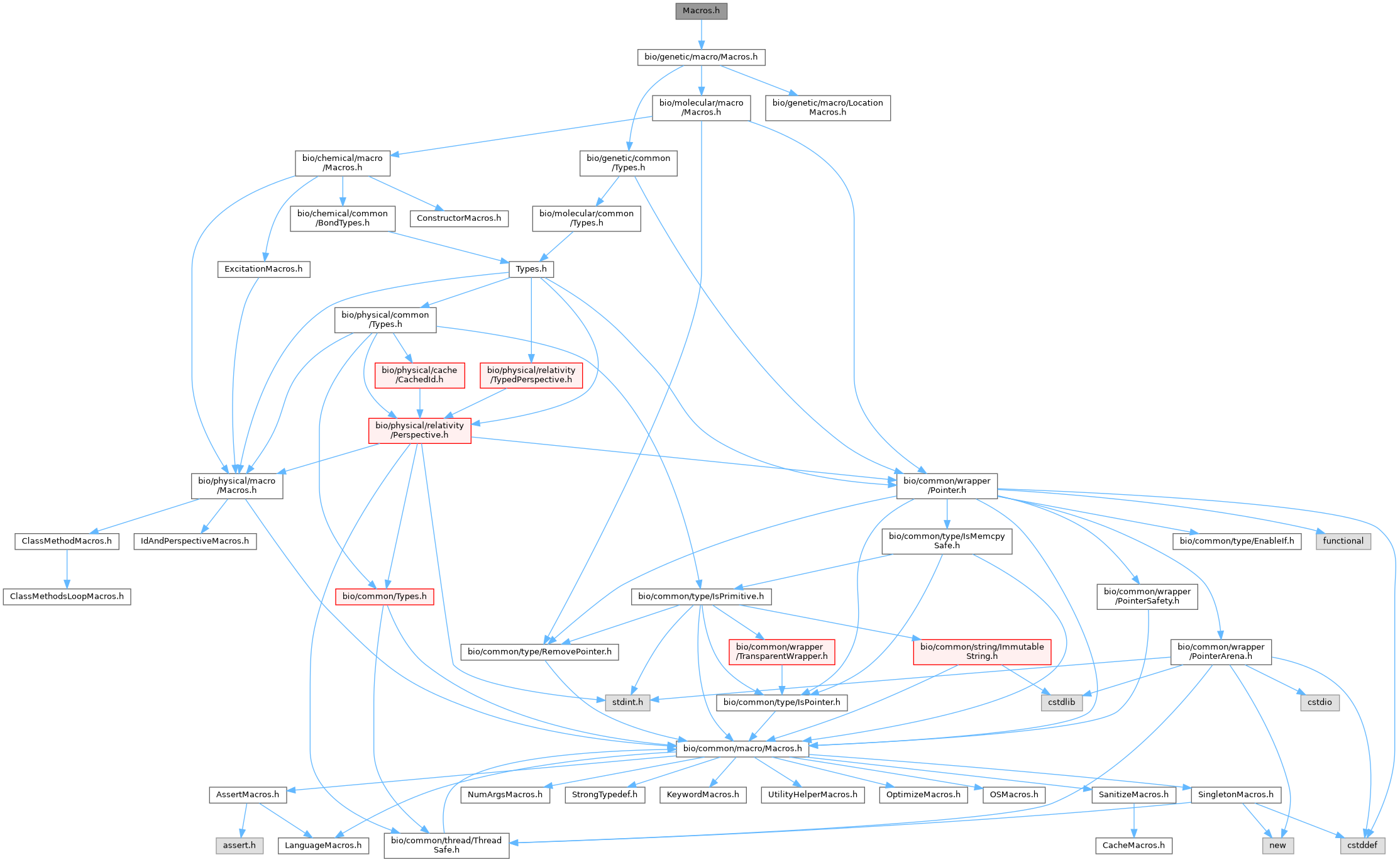
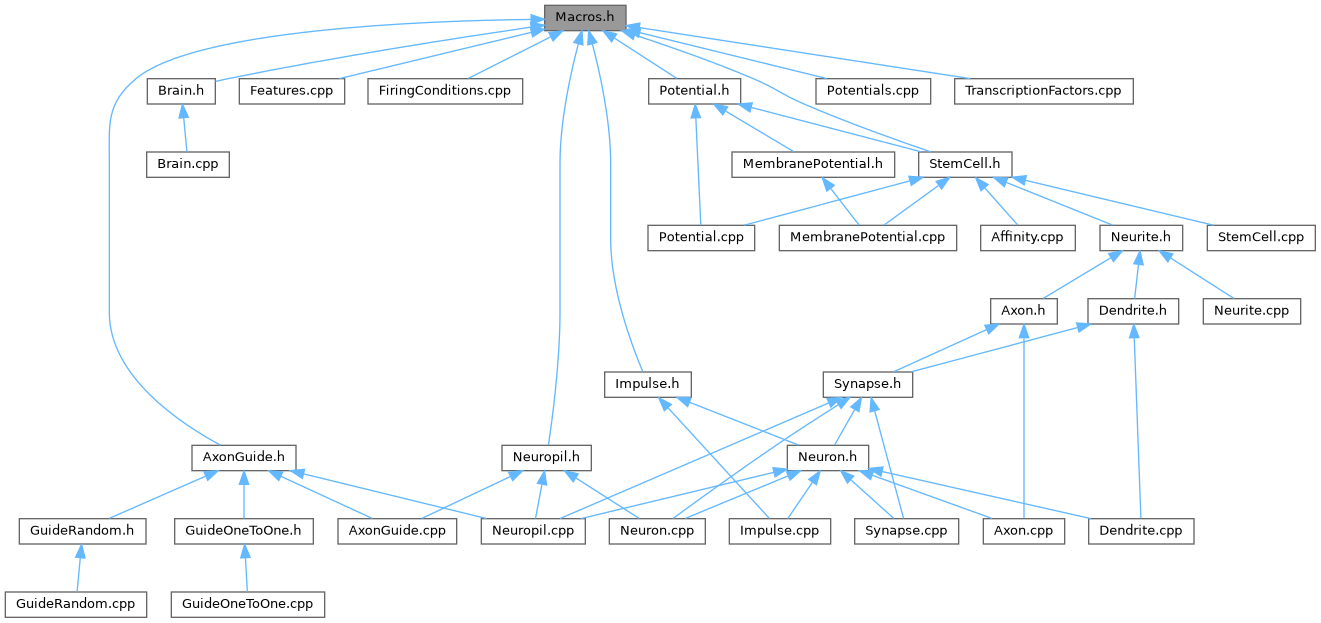
Go to the source code of this file.
Macros | |
| #define | BIO_GET_REQUIRED_CLASS_METHODS_FOR_neural() BIO_GET_REQUIRED_CLASS_METHODS_FOR_cellular() |
| #define | BIO_GET_OPTIONAL_CLASS_METHODS_FOR_neural() BIO_GET_OPTIONAL_CLASS_METHODS_FOR_cellular() |
| #define | BIO_FIRING_CONDITION_FUNCTION_BODY(functionName) |
| #define | BIO_POTENTIAL_FUNCTION_BODY(functionName) |
| #define | BIO_FEATURE_FUNCTION_BODY(functionName) |
Macro Definition Documentation
◆ BIO_FEATURE_FUNCTION_BODY
| #define BIO_FEATURE_FUNCTION_BODY | ( | functionName | ) |
To make defining Features easier, use this macro to define the function body of your Feature Function(). This will assign a value to a string that is identical to your FunctionName e.g. FeaturePerspective::Instance().NameFromId(Value()) would give "Value" Necessitates that functionName be a part of the "potential" namespace and that any other namespaces are already specified (e.g. using namespace)
◆ BIO_FIRING_CONDITION_FUNCTION_BODY
| #define BIO_FIRING_CONDITION_FUNCTION_BODY | ( | functionName | ) |
To make defining Neuron::FiringConditions easier, use this macro to define the function body of your Neuron::FiringCondition Function().
This will assign a value to a string that is identical to your FunctionName e.g. SafelyAccess<Neuron::FiringConditionPerspective>()->GetNameFromId(Value()) would give "Value".
REMINDER: Your Neuron::FiringCondition Function()s should be in the bio::neural::Neuron namespace.
◆ BIO_GET_OPTIONAL_CLASS_METHODS_FOR_neural
| #define BIO_GET_OPTIONAL_CLASS_METHODS_FOR_neural | ( | ) | BIO_GET_OPTIONAL_CLASS_METHODS_FOR_cellular() |
Get all virtual methods defined by neural::Class.
- Returns
- function signatures for use in BIO_DISAMBIGUATE_OPTIONAL_CLASS_METHODS
◆ BIO_GET_REQUIRED_CLASS_METHODS_FOR_neural
| #define BIO_GET_REQUIRED_CLASS_METHODS_FOR_neural | ( | ) | BIO_GET_REQUIRED_CLASS_METHODS_FOR_cellular() |
Get all virtual methods defined by neural::Class.
- Returns
- function signatures for use in BIO_DISAMBIGUATE_REQUIRED_CLASS_METHODS
◆ BIO_POTENTIAL_FUNCTION_BODY
| #define BIO_POTENTIAL_FUNCTION_BODY | ( | functionName | ) |
To make defining Potentials easier, use this macro to define the function body of your Potential Function(). This will assign a value to a string that is identical to your FunctionName e.g. PotentialPerspective::Instance().NameFromId(Value()) would give "Value" Necessitates that functionName be a part of the "potential" namespace and that any other namespaces are already specified (e.g. using namespace)